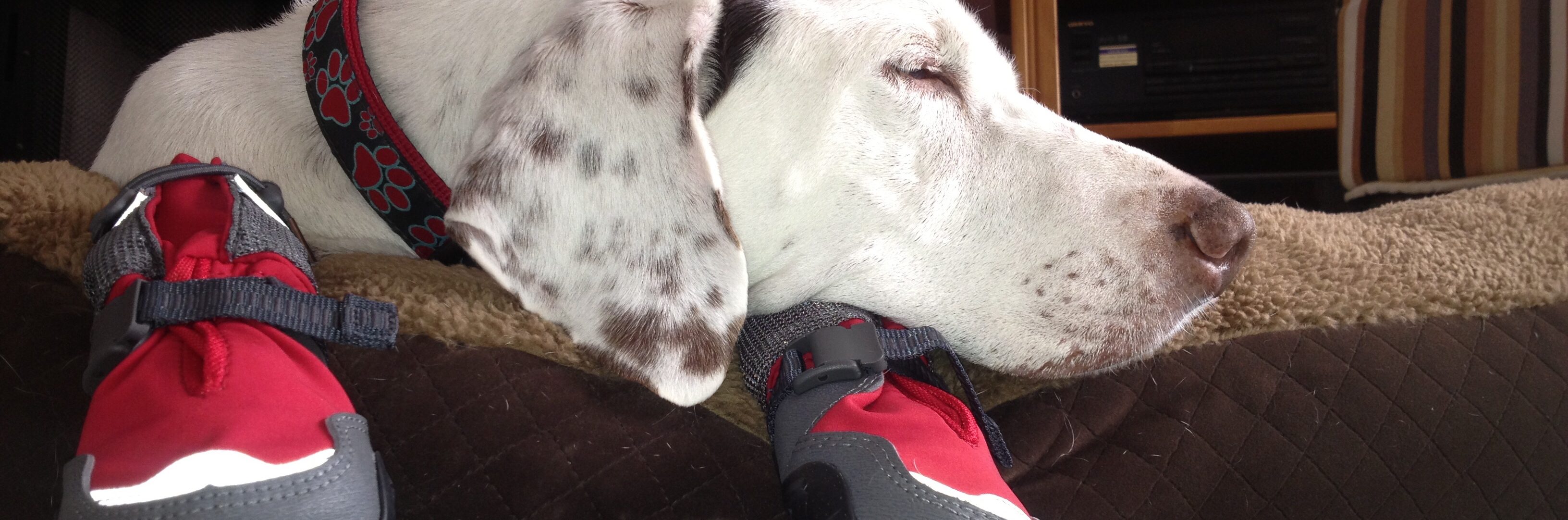
My old girl’s 12 years old. She was nearly one when we adopted her. She’s been an absolutely magnificent hiking partner and continues to be but now in her senior years sadly, she’s starting to show her age. And because of that it’s important to take extra care and precautions with our senior partners on the trail.
To begin with they may not have the stamina they once had. Their heart would never say that. Their body would. My girl, Spring, will go as long as she can until it hurts. And that’s why it’s so important for me as the trail leader to watch her more closely, see her body expression, her tail and her feet. Sure she’ll still pant on hot days and not as much on cooler days but we probably aren’t going to do any more 10 mile hikes. In fact we might be down to only about five or 6 miles round-trip but that’s OK.
Throughout my blogs I like to share my pet experiences in the hopes they might help you as you move through the stages of life with your hiking companions. As my girl ages I am preparing the right gear to help her and me enjoy our hikes to the fullest. So I want to provide a few examples of what I have found that works as well as a couple of pieces of equipment for the “what if” on the trail.
As our companions get older there are things we can do, much like we do for ourselves, to help manage discomfort, pain and soreness. When we are sore after a good hike we might take Tylenol or ibuprofen for the pain. For my dog it’s Rimadyl or a generic like carprofen. These are prescription non-steroidal anti-inflammatory drugs, or NSAIDs. Inquire with your vet about which one might work best for your friend. They typically have a 12 hour comfort cycle so I will definitely give Spring one in the morning before we head out on our hike. I will give her another dose at bedtime to help her sleep and allow her body to heal. Depending on how far we went and how she is moving around the next morning she may get one more dose. It makes all the difference for her mobility. It helps her better enjoy the seasons year round.
Another challenge that starts to creep up in my girl who is part lab and part german shorthair pointer, is a neurological disorder that can start to manifest itself at her age. The easiest way I can identify it is by the sound of her walk. If she starts to walk and I hear a scuffing or scraping sound, instead of the tap tap of her claws that means the top of her foot is scraping on pavement.
Another way you’ll certainly notice it is that every time your dog takes a step normally they flip their foot out, their paw hits the ground for the next step. When my my girl takes that step sometimes her foot doesn’t flip out quick enough so she’ll drag it or actually step on the top of her foot. Before you run out and get some of these aftermarket braces and other kinds of mechanical remedies please consult with your vet. Many of these slings and braces may not be the best option for your pal. They weren’t for my pup. So we just keep a good watch on her as she trots along the trail. I’ve noticed her foot scrape on the sidewalk at times while we’ve been out either walking on leash or on a trail. When it happens I’ll grab her and stop. It gives her body a chance to catch up, then we continue.

An additional item I would strongly suggest you pick up for your senior hiking companion is a dog sling. The way it works is you roll it out flat like a blanket. It has four holes for your dog’s feet. Help your dog walk onto the sling material and then pull up the blanket over their legs and around their body. Attach the straps. Throw the sling over your shoulder and head for home. It can come in handy whether your pup is just too tired to get back to the car or if they have injured themselves. A “what if” would be cut foot pads. To reduce the risk of further injury carry out your paw pal. I have mine with me all the time in my backpack. I’ve not had to use it yet but it’s always in whatever pack I’m taking whether it’s a summer hike or winter backcountry ski trip.
Just because our favorite hiking companion is getting older it doesn’t mean we still can’t enjoy their companionship to the fullest. Just a few precautions, maybe a couple of additional visits to your vet, extra water, and you can continue to enjoy your paw pal for the remainder of their life.
Everyday is a great day to hike.


 Dog Hikes