Giardia can attack your pet year round. Did you know that? I did not.
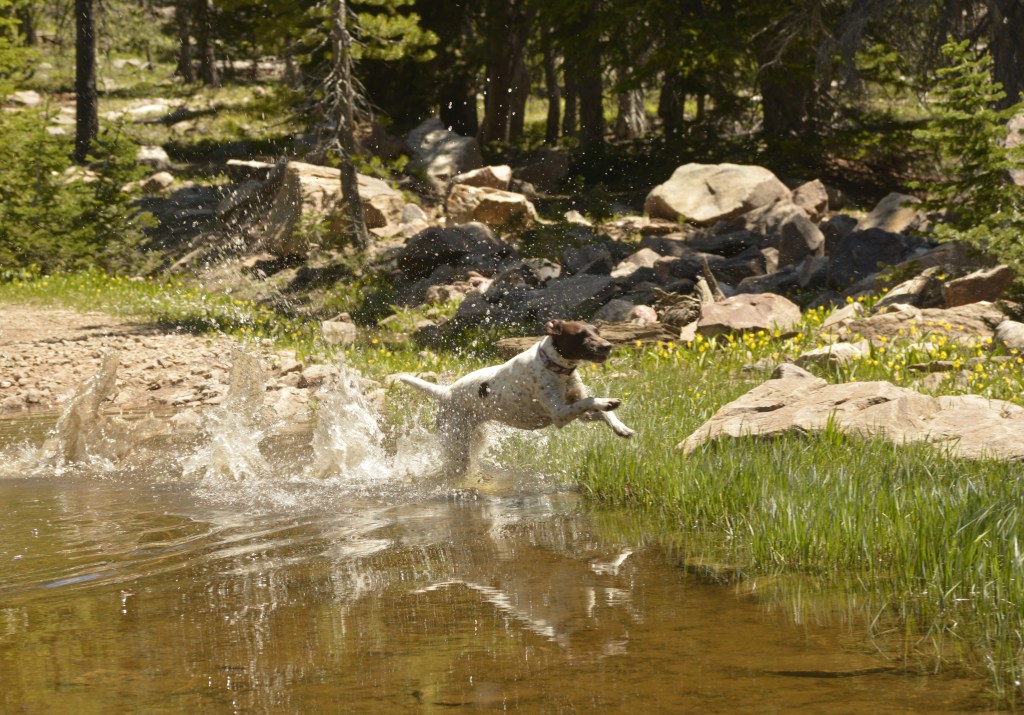
Recently, I took my two German shorthair pointers on a short hike in an area we go to many times each week throughout the year. Today, as on any other given day my little girl needed to relieve herself. Stay with me here.
She had the most explosive, red diarrhea I have ever seen. I was scared. I collected a sample in a poop bag and called my veterinarian.
Luckily the vet clinic had an opening just a few hours later. Here is some backstory. My little girl typically is full of energy and eager to do whatever is on tap. For the past couple of days she had been a bit lethargic. Her appetite was off too.
Fast forward to the examination. I showed her doctor a photo of the bloody mess she left behind. Even before the fecal analysis was done he said he suspected giardia. But how I asked? It’s only beginning to warm up. There was still several feet of snow in the mountains where we usually recreate.
Here’s the really fascinating part of this frightening experience. Dr. Andrei Tarassov, DVM, everyone calls him Dr. T, told me to blame it on bird migration. That makes no sense I said. I thought Giardia spores were deposited by four legged animals in the wild and you or your pet drank water that carried the spores in it.
He said that scenario is true but here in Utah, where we hike and cross country ski regularly, birds migrate through in such large numbers both spring and fall that they are the biggest depositors of the Giardia spore. The nasty germ will show up in small puddles of water anywhere a bird may pass overhead and poop year round. Because this migration happens so often and almost continuously throughout the year, many parts of the state are susceptible to Giardia spores landing almost anywhere.
Gross? You bet!
Dr. T told me that when he worked in Minnesota that an entire family might come down with Giardia after swimming in one of the thousands of lakes in that beautiful state. Those spore deposits might come more from four legged offerings. He said since he moved to Utah he had seen almost exclusively Giardia cases, based on an oral history from the clients, which come from smaller water bodies. Birds flying overhead and pooping or landing and pooping near puddles of water or streams. But what about a vaccination against Giardia?
Dr. T recommended against it. He says it is only about 30% effective and does not help your pet with the symptoms.
Two days after our visit with Dr. T, the fecal analysis confirmed that my Viva had Giardia. Poor girl. Dr. T gave her Metronidazole, a common antibiotic to help ease the discomfort and get her bowels back on the right track.
Research about the signs and symptoms of Giardia state that the illness always presents with diarrhea. Stomach cramps, loss of appetite, vomiting may also be present with your pet. Typically it takes a couple of weeks of good treatment and environmental management to clear up the disease. So that means just because your pup is feeling spry it doesn’t mean take her out to drink from a small mud puddle on a trail right away.
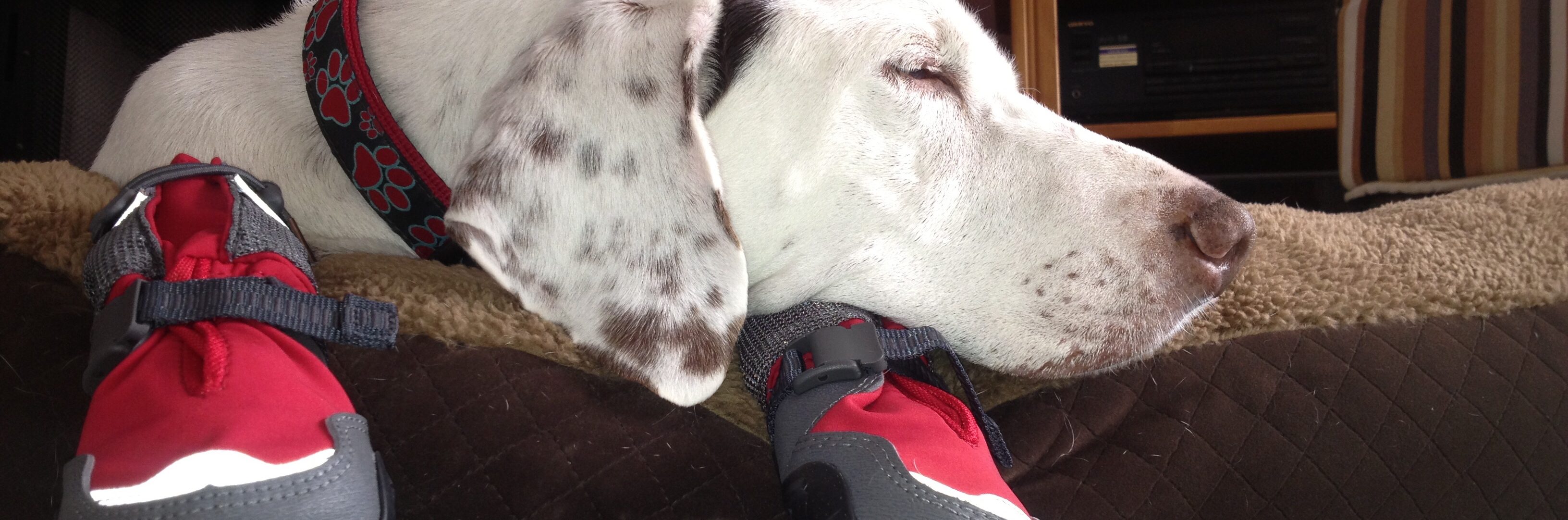
While I watched my precious little pointer nap I tried to replay in my mind where I had taken her that she may have contracted the Giardia spores. The only place I can remember that might fit the timeline from ingestion to impact, about three days, was a local farm turned county park. Plenty of water puddles to check out. Lots of grass to sniff and eat too.
It took about one week for my little girl to regain her full energy level.
What a relief. What a lesson.


 Dog Hikes