As humans we will likely throw on a coat when we go out and play in winter conditions. Seems sensible. Coats for dogs? Maybe.
If I had really thick hair/fur and thick padding on my feet, I might prefer going natural to play frisbee or hike with my pack all winter long. Many dogs feel the same way. Adding an extra layer of a jacket or waterproof coat may actually make your best friend overheat. Really.
All summer long my pals run through water, sit in streams and pant like crazy to cool off as we hike throughout the mountains here in Utah. I have pointers so they are short hair dogs. I see long hair dogs like golden retrievers and thick coated shepherds doing the same thing. They know what to do to keep as comfortable as possible. My old australian shepherd was tri-color black, brown and white, he knew to flop on the air conditioner vent once we got home.
So why would they need a jacket for cold winter days when they are going to generate a lot of body heat? Fashion statement. Fellow friend peer pressure. It was on sale.
Let me share my experience with my dogs over the years and hopefully it will help you decide whether or not a coat is good for your friend.
Because I have short coat hair dogs I thought they should have fuzzy jackets to keep them warm because I wore fleece, so should they. My vet, who also had pointers said they did not need jackets because they create plenty of heat running all day. Now, he offered, if they are going to sit for an extended period of time in cold weather conditions afterward, put a coat on. It would help retain their body heat and keep them comfortable until we all got back home.
I learned two drawbacks to both fleece jackets and cape-type jackets for my dogs too during long cross country ski days. Snow will buildup under the chest section of the cape and hold in moisture and cold. Also, if the fleece got too wet from running through a stream or just bounding endlessly through deep snow, that wet fleece material drew away their body heat.
It was easy to tell when that was happening. My dog shivered. I took off the jacket and we snacked on beef jerky in the sunshine until he warmed up. Then it was off to the next snow pile for him.
On the other hand, I have close-fitting jackets that work well with older dogs and dogs that are not in top notch health. I had a little german short hair girl that was 15 or 16 years old. My wife I were fostering her after she was found at a shelter badly treated and abused. With a few weeks of love and food she was saucy and ready for action. Sure wish we could have had her long before the hard life she had to endure. Anyway, we put on a fleece jacket with a water repellent outer shell. It kept her warm without making her uncomfortable. She trotted around with our other dogs and really seemed to enjoy the time. Every so often I would check on her body temperature to ensure she did not overheat.
The easiest way to determine if your dog is getting too wet or cold is to simply put your hand under the jacket and feel their chest. They expel a great deal of heat from there. A warm, cold or wet chest, your hand is the best gauge to determine their immediate comfort.
I did learn about a valuable winter accessory that I do believe helps my dogs. From a dog trainer friend of mine, she recommended neck gaiters. I use wide, stretchy, fleece gaiters with great graphics. They look great and they work.
Now. I realize these fashion things touch on what we discussed above. However, in this case, the gaiters are around the dog’s neck, hold in heat and provide some cool statements in the deep snow. I’m not a robot. I like my dogs to look … human too you know. Anyway, the neck gaiter stays dry longer. If it gets wet or ice crystals start forming on it, I pull it off and let it warm up in my backpack.
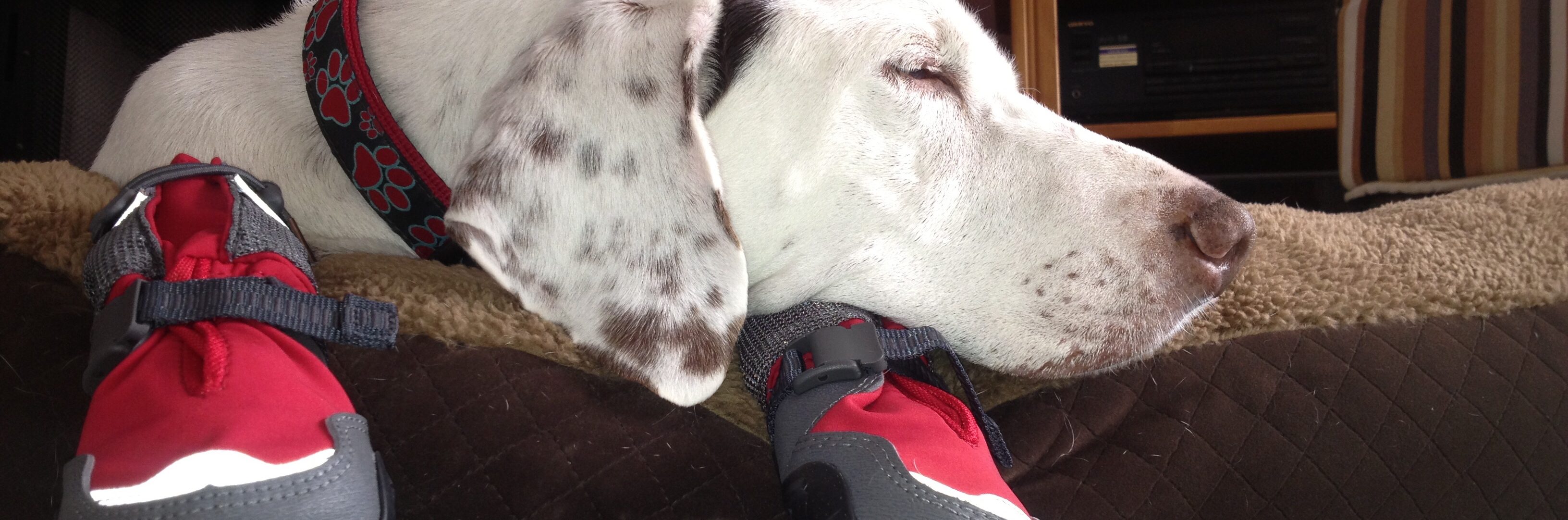
As for booties for dogs, if you find a good pair that will fit their feet without being too snug, and they have a sock that extends one-fourth to one-third up their legs and there are at least two strong


straps to position and hold the boot, go for it. If they stay on you have a winner. If not, well, welcome to the crowd. I have had only one dog who not only enjoyed wearing his boots but they actually stayed on his feet.
If I take my dogs cross country skiing with me I do not put on booties. I want them to be able to get a good grip with their nails on icy slopes. But if we are walking on a snowy road and there may be rock salt or sand, I will at least bring the boots along in case my pups start complaining. When they stop and lift one foot or another and it’s not snow buildup, I will try to warm up their foot pads and then strap on the boots to finish our walk.
The winter season is one of the most magical times of year to be in the backcountry. When green and yellow and orange change to white, the landscape takes on a new personality.

 Dog Hikes