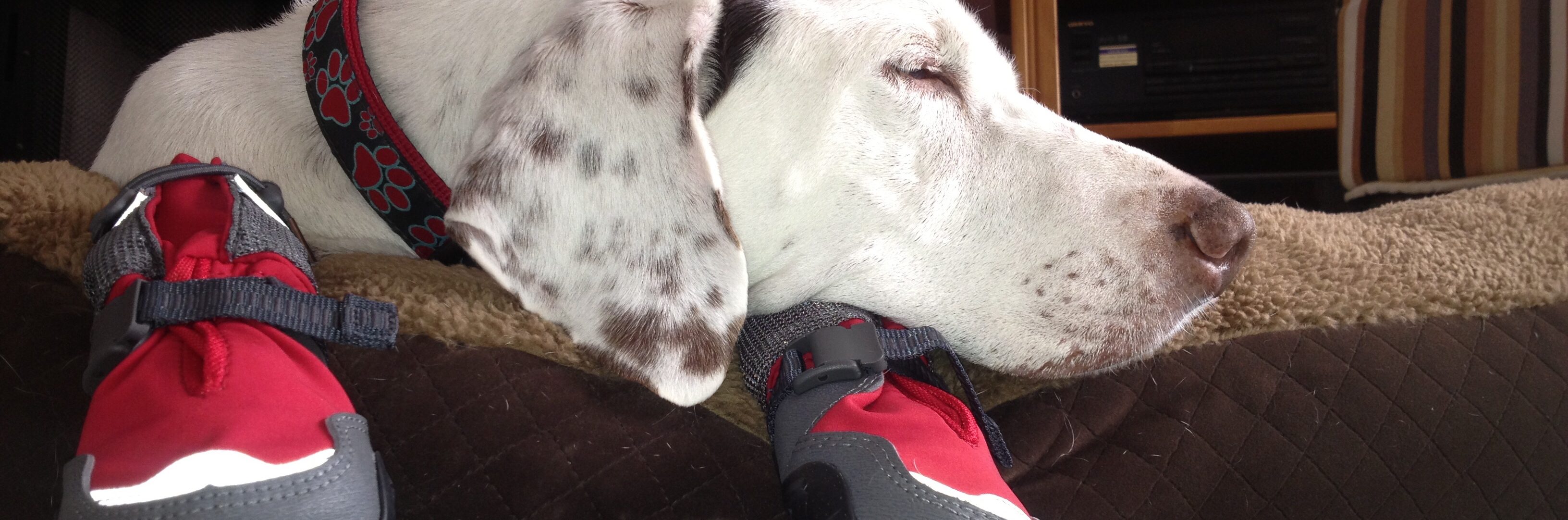
One of the biggest reasons to explore the backcountry or desert solitude is discovering the wildlife that makes such places home.
Most animals prefer to keep their distance from you and your enthusiastic four-legged hiking companions. However, two small yet very significant members of the outdoor community will stand their ground. Rattlesnakes and porcupines.
Sure, we all have heard stories or seen the mother moose who will not step aside so you can pass by her youngster. I don’t blame her.
Black bears would rather not be bothered. Good. Deer and elk – forget about it.
But, my always curious dogs have successfully encountered and lost their bets against two of the most formidable, and frankly, life threatening critters they can encounter.
Let me explain. Rattlesnakes. This one is obvious. They strike so quickly that neither I nor my dogs can move away fast enough. Hiking along a mountain trail in early fall, my always alert english pointer heard a noise in a bush along the foot trail. Instantly she jumps into the bush to see what’s up.
Bad idea. By the time I heard the rattle, it was too late. She had been struck and bit above her eye. At first I did not realize it. I pulled her out of the bush and saw a small dot of blood above her right eye. No sign of the snake. Initially I thought she may have hurt herself when she jumped into the bush. I have seen her countless times jump into sagebrush, and other thick cover with no apparent regard for her well being.
Any injury is merely a badge of honor to her and a sign of a successful adventure. Not this time. This young dog only stops moving when it’s dinner time or bedtime. Within ten steps she did not move. Now I realized I had a potentially life threatening emergency.
We were over one mile from the car. My little girl weighed about 40 pounds. I picked her up and started back to the car as quickly as I could. My wife and our other pointer followed letting me clear the trail. Along the way we warned a mountain biker to be aware of a possible rattle snake on the trail as we passed him by.
By the time we all got back to the car my legs were shaking. I could not bend my arms straight to put my wounded girl on the back seat. She rolled out of my grip and landed with a thud. We headed down canyon to the pet ER.
After three antivenin vaccinations and three days of observation at the veterinary clinic she was doing well. I think she found the entire frightening experience rather fun. Her head and neck were so swollen from fluid buildup she was hardly recognizable as our little pointer girl. When we came to visit her she would start wagging her tail and try to jump up on us to say hello and rub her balloon head all over us.
We laughed with tremendous relief. Our veterinarian said she would survive with no major complications. The two bite marks above her eye healed fine but hair did not grow back. The only complications we were warned to keep an eye out for were respiratory difficulties and lethargy.
For the next 12 years of her life, she never appeared to have any complications from that rattlesnake bite. She lived a long and full life.
Based on that experience, I have invested in rattlesnake vaccine for my dogs. They now get an initial shot and a booster one month later; annually when it’s time to get back into possible snake country. If the medication will reduce the impact of the venom, I am all for that.
From my point of view, this vaccination is worth every penny. Please talk with your veterinarian about the options and benefits.
Luckily I have not had another standoff with a rattlesnake. I know it is only a matter of time. I only hope I am quick enough to keep my dogs safe.
Another backcountry medical emergency that many folks might not think about is porcupine quills.
The same pointer girl how found the rattler also found a porcupine not willing to yield the right of way through the pine trees.
Now, in my defense, I was not present when the porcupine convinced my girl to move on. I found out about it when she came trotting up to me while I was casting a dry fly on a lake at over 10-thousand feet in elevation.
She bumped her nose into my bare leg so I too could feel the sharp quills. She did it several times. It hurt each time. She was proud of this collection of prickly points.
I had never dealt with such a medical challenge before and carried no supplies in my backpack. A forest service crew was working nearby and one of them said to cut off the ends of the quills before trying to pull them out. Apparently the quill is filled with air. By cutting them the air escapes and the quill collapses making it easier to remove. He also offered that it would be better to leave them in until I get back to my car. That way there would be less chance of infection.
OK. But what about the quills going deeper. He didn’t think that likely because the quills have a pointed barb on the end and they were probably in as far as they were going to go.
Great. We hiked four miles back to the car and headed for the veterinary clinic. Twenty-nine quills were removed. They were stuck to my dogs jowls on the inside and outside, a few were lodged inside her nose. Luckily none had enter her eyes.
Five years later, with my little brown and white pointer girl who came along after the last one, also found a porcupine in the high country. This time it was at a different lake but with a similar outcome.
Having taken the advice from the forest service worker years before, I had the medical tools I needed to remove the quills — medical scissors and a pair of pliers. My little girl was not as proud of her collection but sat on the seat of the car while I cut and pulled out 19 quills.
It had to hurt. I drew blood from a few of the larger quills in her jowls but she showed no signs of pain. She was the best patient.
I called our veterinarian when I got back into cell phone range. She suggested cleaning around the wounds and just watch for infection. Otherwise no problems. My girl healed quickly. We were back on a similar trail two weeks later. We all had a great time and came back without a scratch.
It’s hard to predict what lies ahead on any trail. Preplanning and prevention are great options. But sometimes, wilderness medicine skills come in very handy to save the day and keep you and your paw-pals exploring.
Good hiking on your next adventure. More dog hiking tips next time.


 Dog Hikes