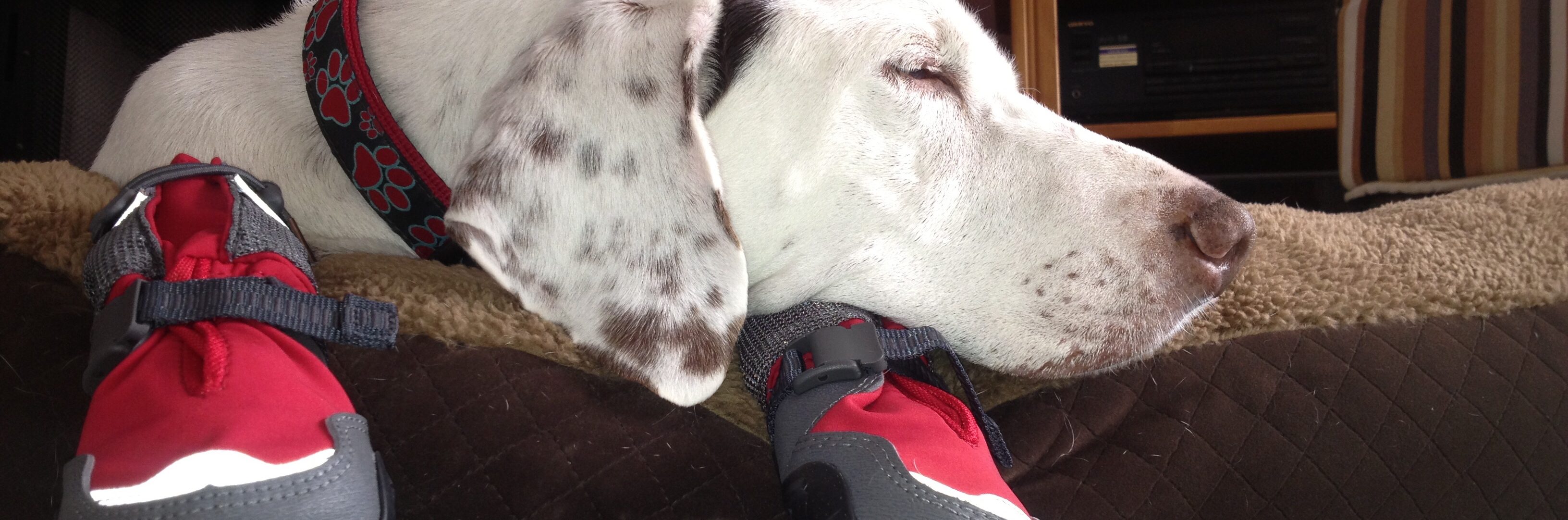


Few things are as satisfying as a long day hike in the mountains or an overnight camping trip with your best friends. Miles from civilization sounds great. No cell service means no bothers. But when someone gets injured everything changes, especially if it’s your four-legged friends.
Carrying the essential first aid gear for your pets can help you stay on the trail longer. It’s second nature to pack some Band-Aids and mole skin for our blisters and scrapes. It’s another thing entirely if your 100 pound best friend and companion has severely cut one of his pads or wrestled with a porcupine and lost, or worse, broke his leg.
Dr. Kay Brown, local veterinarian and avid trail hiker says there are some simple items everyone should bring and know how to use. Basic stuff found in most compact travel first kits is fine. But specifically dogs will tempt fate in many other ways. “I would pack Benadryl because you can use that for dogs for any kind of insect sting like a bee. I would also pack an antibiotic and some self-adhesive gauze bandages like a sports wrap.”
For open wounds there are antibiotic powders and pads available that quickly help to stop bleeding. Most are found at pet stores or local drug stores. “If your dog cuts an ear or breaks a toe nail, the powder works great for superficial bleeding,” Dr. Brown says. These topical powders and pads are not designed to stop deep bleeding though. That’s considered a medical emergency. More about that later.
“The things you are going to most likely face in the backcountry are cut foot pads or cuts on their body,” Dr. Brown says. Don’t overlook butterfly bandages for cuts too. “You might get more hair around the wound but it will at least keep it closed until you can get back for proper care.”
Our dogs are incredibly resilient. Their bodies endure a lot crashing through scrub oak, aspens, pine trees and all types of ground cover. And although the chances of administering first aid to your eager companion are slight, it’s important to know how to treat minor injuries.
On a recent hike, my wife and I had lost sight of one of our dogs deep in the backcountry for most of the day. He was an English Pointer and anything that moved caught his attention. If it flew, he was gone. Good English Pointer but he had no interest in keeping track of us. He was much quicker than we were this time. When we finally found him on a ridgeline at dusk he was exhausted. So were we. He was limping badly on one back leg. To expedite our decent we used my wife’s backpack as a stretcher to help bring him down. It was a simple solution to what could have been a prohibitive problem for our 55 pound boy.
If your pets are suffering from pain and stiffness Dr. Brown recommends you check with your veterinarian before giving them any anti-inflammatory medications.
One other challenge I never expected to encounter was with my 13 year old lady pointer and an over-protective porcupine. As the picture below shows, this girl took it headon. There were nearly 50 sharp quills buried in her snout, inside her mouth, in her nose – it was a real mess. However, she was actually thrilled to show me what she had collected. I wasn’t watching her approach as I fished Little Elk Lake in the Uinta mountains. She ran up and poked her nose into my bare leg. That really hurt. I can only image what it must have felt like for her.
Porcupine quills are very dangerous if left alone. Dr. Brown strongly urges immediate extraction with pliers or whatever you have in your first aid kit. She says that if the quills are left in the animal, the sharp points allow them to migrate deeper into the soft tissue causing even more damage and possible deep infection. One old timer on horseback was near us at the lake and he said he just cuts the ends off of the quills. They will deflate and that makes them easier to pull out. All I know is my girl proudly wore them all the way back to the veterinary clinic. About 300 dollars later along with a lot of painkillers, I took her home.
BACKCOUNTRY MEDICAL EMERGENCIES
Two debilitating injuries you may encounter on a backcountry hike are fractures and rattlesnake bites. Dr. Brown says if your dog breaks a leg don’t use a rigid split, instead use heavy bandages to immobilize the fracture. It’s important to carry out your four-legged companion to help reduce the risk of any further tissue damage or infection. There are a variety of splitting and stretcher products available to help in the event you run into these types of challenges. This type of injury is definitely a medical emergency. Get them off of the hill as soon as possible.
Rattlesnakes are out doing their thing now that the temperatures are hot. Desert terrain and lower mountain trails in scrub oak along the Wasatch front are home to many possible encounters. Several years before the porcupine incident, my same little girl, the adventure queen also found out what it was like to tussle with a young rattlesnake. She lost that time too. I heard the rattle and hiss but that was her cue to jump in and explore. I pulled back on her leash as quickly and as hard as I could but I was too late. The snake bit her above and below her right eye. She stopped walking instantly. I could see she was in pain this time. The hike was over.
I picked her up and headed for the pet ER. After some 1300 dollars and four days in the pet ward our girl was just fine. The point here is prevention. “Make sure your dogs are up to date on their vaccinations. Invest in the rattlesnake vaccine and boosters too,” Dr. Brown advised. Before that first backcountry hike be sure to update all vaccinations. Dogs being dogs, they love to roll in stinky stuff and eat completely unidentifiable objects. Also, Utah is a desert so unless you plan to hike above 7000 feet in elevation, consider a rattlesnake vaccination too.
For me the sign of a great hike includes a few cuts and scrapes whether that cartoon character band-aid is on me or my four-legged ladies it means it was a perfect day.

 Dog Hikes